
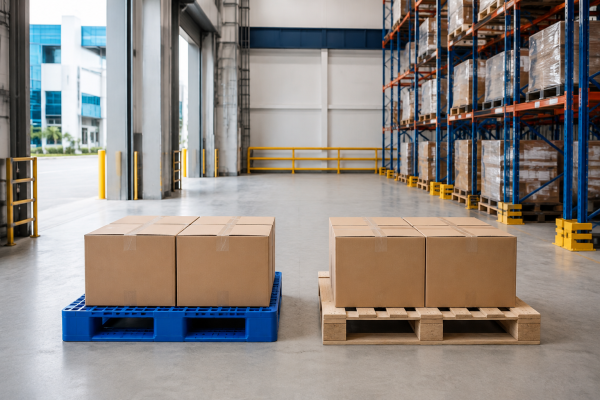
Pallet choice isn’t usually the first decision a warehouse manager thinks hard about until a shipment gets rejected over fumigation paperwork, or a batch of wooden pallets starts breaking apart after a few months in a humid store room. Both plastic and wooden pallets have a place in UAE logistics, but the right choice depends on what you’re storing, how often the pallet gets reused, and where the goods are headed.
How Plastic and Wooden Pallets Actually Compare
The differences come down to a handful of practical factors that matter more in the UAE’s climate than they might elsewhere.
Hygiene
Plastic pallets, typically HDPE, have a non-porous surface that can be wiped down or washed. Wooden pallets absorb moisture, oils and odours, and are harder to fully sanitize, a real issue for food, beverage and pharmaceutical storage where contamination control matters.
Durability in Heat and Humidity
Wood expands, contracts and eventually splinters or rots when it’s repeatedly exposed to heat and humidity, both of which the UAE has in abundance. Plastic pallets hold their shape and structural integrity far longer under the same conditions, which means fewer replacements over time.
Weight and Handling
Plastic pallets have a consistent weight, since they don’t absorb moisture the way wood does. Wooden pallet weight can vary noticeably depending on humidity, which complicates freight calculations on weight-sensitive shipments.
Export Requirements
Wooden pallets used in international shipping generally require ISPM-15 heat treatment and certification to prevent the spread of pests. Plastic pallets are exempt from this requirement, which simplifies paperwork and avoids treatment delays for exporters.
Pests and Contamination
Wood is vulnerable to insect infestation, a genuine risk in warehouse environments storing food or organic materials. Plastic pallets carry no such risk.
Upfront Cost
This is where wood still competes, a basic wooden pallet is often cheaper to buy than a plastic one. For genuinely single-use, short-distance domestic shipments, that lower upfront cost can outweigh the durability difference.
When Plastic Pallets Make the Most Sense
- Food, beverage or pharmaceutical storage requiring hygienic, washable surfaces
- High-turnover warehouses where pallets are reused hundreds of times
- Export shipments where avoiding ISPM-15 fumigation saves time and cost
- Racked storage systems where consistent pallet dimensions and weight matter
- Any environment where humidity or heat would degrade wood over time
When Wooden Pallets Might Still Work
- Genuinely one-way, single-use domestic shipments
- Very low-budget operations where upfront cost outweighs long-term durability
- Short-term or temporary storage with no repeated handling
Making the Switch
Warehouses moving from wood to plastic don’t need to replace their entire pallet stock overnight. Most operations phase it in, starting with racked storage or export lines where the case for plastic is strongest, then expanding as wooden pallets reach end of life. A plastic pallet supplier in the UAE can typically match heavy, medium or light duty options to your existing racking system, so the switch doesn’t require redesigning your warehouse layout.
Frequently Asked Questions
Are plastic pallets more expensive than wooden pallets?
Upfront cost is often higher for plastic, but the total cost over the pallet’s lifespan is usually lower, since plastic pallets last longer and need less frequent replacement.
Do plastic pallets need fumigation for export?
No. Plastic pallets are exempt from the ISPM-15 fumigation and certification requirements that apply to wooden pallets on international shipments.
Can plastic pallets hold the same load as wooden pallets?
Yes, heavy duty plastic pallets are built to match or exceed the load ratings of standard wooden pallets, with options available for racking, medium and light duty use.
Are plastic pallets better for food storage?
Yes. Their non-porous surface is easier to clean and doesn’t absorb moisture, odours or bacteria the way wood can, making them a common choice for food and beverage storage.