
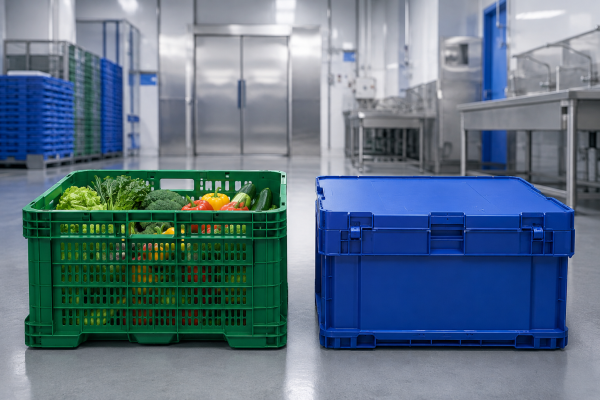
The choice between ventilated and closed crates isn’t about which is generally “better” , it’s about matching the crate to what’s inside it. Getting this wrong can mean produce spoiling faster than it should, or contents that needed protection being left exposed.
When Ventilated Crates Make Sense
- Fresh fruit and vegetables; airflow slows heat buildup and moisture accumulation that speed up spoilage
- Poultry: ventilation supports animal welfare during transport and handling
- Bakery goods; airflow helps prevent condensation that can affect texture and shelf life
- Dairy and milk crates; ventilation supports temperature regulation during distribution
- Eggs; perforated design allows airflow around individually supported eggs
When Closed Crates Make Sense
- Seafood: sealed design suits wet, cold storage without leakage
- Documents and records: closed design protects against dust and moisture
- General retail goods: full enclosure protects products during transport and storage
- Bail arm crates: closed design with a carry handle, useful for repeated manual handling
- Milk pouches : sealed design keeps pouches secure and hygienic during distribution
Nestable vs Non-Nestable Options
Within both ventilated and closed ranges, some crates are designed to nest inside each other when empty, saving space during storage and return transport. This is particularly useful for operations moving high volumes of produce or goods where empty-crate storage space is limited.
Making the Choice
If you’re unsure which type suits a specific product, the general rule is: does the product benefit from airflow, or does it need to be sealed off from the environment? Fresh, perishable goods usually lean ventilated; sensitive, contamination-prone or wet goods usually lean closed.
Frequently Asked Questions
Can I use a closed crate for fresh produce instead of ventilated?
It’s not recommended for most fresh produce, trapped heat and moisture in a closed crate can accelerate spoilage compared to a ventilated design.
Are ventilated crates suitable for seafood?
Closed crates are generally better suited to seafood, since they contain moisture and support consistent cold, wet storage conditions.
What is a nestable crate?
A nestable crate is designed to stack inside empty crates of the same type, saving storage space and reducing return transport costs.
Do bakery crates need to be ventilated?
Yes, ventilation helps prevent condensation buildup that can affect the texture and shelf life of bakery goods during storage and transport.