
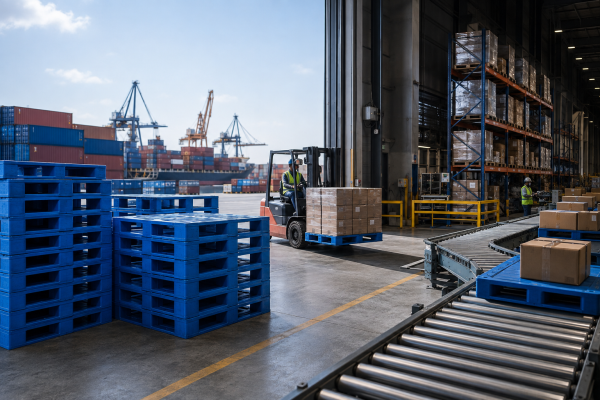
The GCC’s logistics and warehousing sector has grown substantially in recent years, and pallet choice has become a bigger part of that conversation than it used to be. Here’s what’s actually shaping demand.
E-Commerce and Logistics Growth
The expansion of e-commerce and third-party logistics across the UAE and wider GCC has increased the volume of goods moving through warehouses and distribution centres. More throughput means more pallet cycles, and operations running high volumes tend to favour plastic pallets for their durability under repeated handling compared to wood.
Sustainability and Regulatory Pressure
Regulations targeting single-use plastics and waste reduction across the region, including the UAE’s phased single-use plastic restrictions, are part of a broader circular economy push. While these specific regulations don’t target reusable industrial packaging, the underlying policy direction favours durable, recyclable materials, which plastic pallets already represent.
Export and Trade Considerations
Businesses exporting from the GCC continue to weigh the practical advantage plastic pallets offer over wood: no ISPM-15 fumigation and certification requirement. For exporters managing tight shipping schedules, avoiding treatment delays is a meaningful factor in pallet selection, and it’s a trend that continues to support plastic adoption for export-focused operations.
Hygiene Standards in Food and Pharma
Food, beverage and pharmaceutical sectors across the GCC continue to expand, and both carry strict hygiene expectations for storage and handling equipment. Plastic pallets’ non-porous, washable surface remains a practical fit for these sectors, reinforcing demand from an industry that’s growing regardless of broader logistics trends.
What This Means for UAE Businesses
- Warehouses reviewing pallet stock have more reason than ever to consider plastic over wood, given the combined logistics, regulatory and export trends
- Suppliers offering a full range of duty ratings (heavy, medium, light) are better positioned to match growing, varied demand across sectors
- Businesses planning ahead should expect continued movement toward reusable, durable packaging as the regional default rather than the exception
Frequently Asked Questions
Is demand for plastic pallets growing across the GCC?
Yes, driven largely by logistics and e-commerce growth, sustainability policy direction, and export requirements that favour plastic over wood.
Are GCC countries banning wooden pallets?
No formal region-wide ban on wooden pallets exists, the shift toward plastic is driven by practical and regulatory trends rather than a direct prohibition.
Why do exporters prefer plastic pallets in the GCC?
Plastic pallets avoid the ISPM-15 fumigation and certification requirement that applies to wooden pallets on international shipments, simplifying export logistics.
Which GCC sectors use the most plastic pallets?
Logistics, food and beverage, and pharmaceutical sectors are among the largest users, given their volume of throughput and hygiene requirements.