
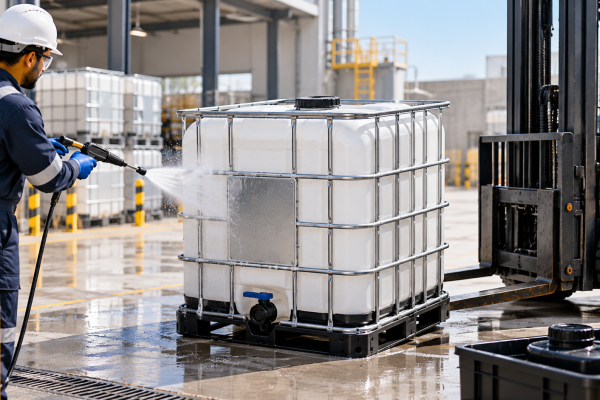
A 1000-litre IBC tank is simple to operate but easy to mishandle if your team isn’t following a few basic safety and cleaning practices. This guide covers the handling, cleaning and inspection routine every UAE facility storing bulk liquids should have in place.
Before you fill: inspect the cage, bottle and base
Check the steel cage for corrosion or bent tubing, the HDPE bottle for cracks or UV degradation, and the base, plastic or steel, for stability on your racking or floor. If you’re deciding between a new tank, a refurbished one, or a Cobo-style rebuild, our guide on what an IBC tank is and how the types differ breaks down the construction differences that affect this inspection.
Cleaning between different liquids
Never assume a tank is clean because it looks empty. Residue from a previous chemical can react with a new fill, contaminate food-grade liquids, or damage the HDPE lining over repeated cycles. A standard rinse-and-inspect cycle, triple rinse with a compatible cleaning agent, visual inspection under light, and a residue swab test for food-grade or pharmaceutical use, should happen between every liquid change, not just when switching chemical families.
Handling, stacking and secondary containment
Filled IBC tanks are heavy, roughly 1,000 kg for water-density liquids plus the tank weight, so only stack tanks rated and designed for stacking, and never stack filled tanks more than the manufacturer’s rated height. For chemical, oil or any liquid with contamination risk, place the tank on a spill pallet sized for IBC totes rather than directly on the warehouse floor. We cover when secondary containment is required under UAE practice in our spill pallet guide.
If you’re still weighing IBC tanks against drum storage for your specific liquid volumes, see our comparison: IBC Tank vs Drum , Which Is Better for Bulk Liquid Storage?.
Frequently Asked Questions
How often should an IBC tank be replaced rather than reused?
HDPE bottles typically handle multiple refill cycles safely, but UV exposure, chemical compatibility and physical damage all shorten service life. Inspect before every refill and retire any tank with visible stress cracking or cage damage.
Is a steel base or plastic base better?
Steel bases offer more stability for forklift handling and taller stacking; plastic bases are lighter and resist corrosion from spilled liquid. The right choice depends on your handling equipment and what you’re storing.
Do refurbished IBC tanks meet the same safety standards as new ones?
Reputable refurbished and Cobo-style tanks are cleaned, pressure-tested and re-certified before resale. Confirm certification documentation when ordering. Request a quote and we can talk through new vs refurbished for your use case.