
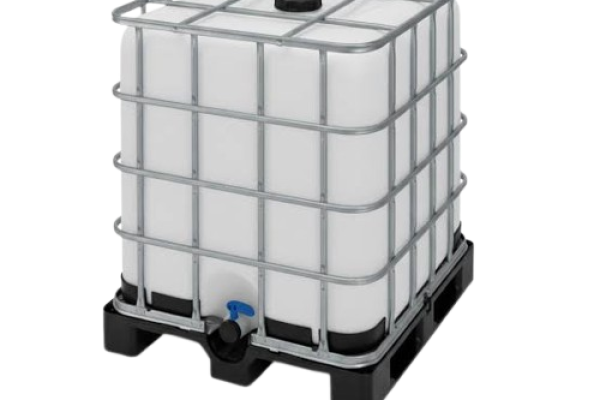
A standard IBC tank holds 1000 litres (275 US gallons) and measures about 1200 × 1000 × 1155 mm (length × width × height). That is a footprint of roughly 1.2 square metres, which is close to a standard pallet.
Knowing the exact size matters before you buy. It decides where the tank can sit, whether it fits through a door or onto a truck, and which spill pallet or forklift you need alongside it. Here is what to plan for.
What Are the Dimensions of a Standard IBC Tank?
| Specification | Standard 1000-litre IBC |
|---|---|
| Capacity | 1000 litres (275 US gallons) |
| Length × width × height | 1200 × 1000 × 1155 mm |
| Footprint | About 1.2 m² (1.2 m × 1.0 m) |
| Bottle material | UV-stabilised HM-HDPE (high-molecular-weight polyethylene) |
| Pallet base | Plastic or steel, depending on the model |
These are the dimensions of the IBC tanks we list, including the IBC Tank with Plastic Pallet Base and the IBC Tank with Steel Pallet Base. Other suppliers may offer different capacities, so always confirm the size on the product specification. Our IBC tanks range shows the current options.
How Much Is 1000 Litres in Drums?
A standard drum holds around 200 litres, so one IBC tank holds the same as roughly five drums while using about the floor area of one pallet. If you are comparing the two options, our guide to IBC tanks vs drums explains the trade-offs.
How Much Space Do You Need for an IBC Tank?
Plan for more than the footprint alone. The measurements above are the tank itself, so leave room around it for a forklift or pallet truck to approach and for people to reach the valve and the filling lid.
- Floor space: at least 1.2 × 1.0 m per tank, plus working clearance on the sides you need to reach.
- Height: 1155 mm to the top of the tank, so check shelf, mezzanine and doorway clearance.
- Handling: confirm your forklift or pallet truck can enter the pallet base from the side you plan to use.
- Containment: store tanks on a bund or spill pallet so a leak does not spread, such as our IBC Tank Spill Pallet.
Does the Pallet Base Change the Size?
On the models we list, the plastic base and steel base tanks share the same overall dimensions, so you can plan the space the same way for both. The base affects handling and durability, not the footprint. The steel base offers extra stability, and the plastic base is the lighter option.
Choosing the Right IBC Tank
Start with what you will store. Our buyer’s guide to IBC tanks covers uses and features, and our IBC tank safety, cleaning and handling guide explains how to keep tanks in good condition. If you are weighing a lower-cost unit, compare our new and refurbished options in the IBC tanks range.
Frequently Asked Questions
What size is a standard IBC tank?
A standard IBC tank holds 1000 litres and measures about 1200 × 1000 × 1155 mm.
How many gallons is a 1000-litre IBC tank?
A 1000-litre IBC tank holds 275 US gallons, or about 220 imperial gallons.
Are all IBC tanks 1000 litres?
No. 1000 litres is the most common capacity, but smaller and larger sizes exist. Check the listed capacity and dimensions before ordering.
Can an IBC tank fit on a standard pallet footprint?
An IBC tank is built on its own pallet base of 1200 × 1000 mm, so it matches the 1200 × 1000 mm pallet footprint used in many warehouses.
Need a tank for a specific liquid or space? Talk to the NextBridge team and we will help you choose the right IBC tank.