
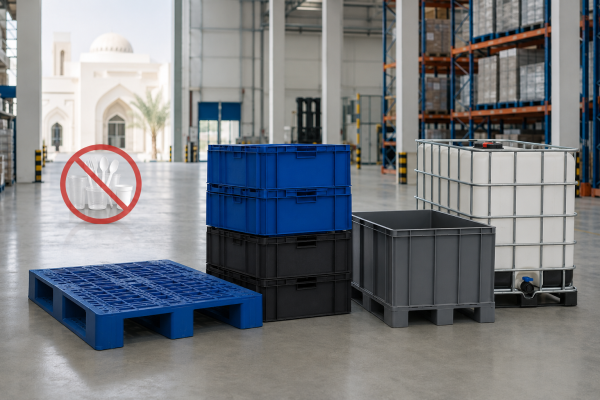
If you manage a warehouse, distribution centre or manufacturing facility in the UAE, you’ve likely seen headlines about the plastic ban taking full effect from January 2026 and wondered whether it touches your pallets, crates or storage bins. It doesn’t but the regulation is still worth understanding, because it signals the direction UAE policy is heading, and it has some relevance to how you think about packaging long-term.
What the 2026 Ban Actually Covers
The regulation traces back to Cabinet Resolution No. 380 of 2022, which set out a phased plan to restrict single-use plastic products across the UAE. It rolled out in stages:
- 2024: Ban on single-use plastic shopping bags nationwide
- 2025: Ban extended to plastic stirrers, straws and Styrofoam containers
- 1 January 2026: Final phase: plastic cups, lids, cutlery (forks, knives, spoons), plates and food containers made from conventional plastic
The final phase mainly affects food service, hospitality, retail and delivery businesses, the sectors that hand disposable plastic items directly to customers. Products made from PLA (a compostable, plant-based plastic) are exempted, along with items intended for export, thin wrapping used for fresh food, and refuse bags.
Non-compliance carries real penalties, fines starting around AED 2,000 for a first violation, rising for repeat offences, along with possible removal of non-compliant stock from circulation.
Why Pallets, Crates and Storage Bins Aren’t Affected
The ban is specifically written around single-use products, items designed to be used once and thrown away. Industrial packaging like plastic pallets, crates, spill pallets and storage bins is the opposite of that: it’s built for hundreds or thousands of reuse cycles across years of warehouse operation. Any plastic pallet supplier in the UAE selling reusable HDPE pallets and crates is operating well outside the scope of this regulation.
That distinction matters. The UAE’s plastic regulations are part of a broader circular economy push, reducing waste by keeping materials in use longer, not eliminating plastic outright. Reusable plastic pallets and crates across the UAE already align with that goal, which is one reason they sit outside the scope of this particular ban.
What This Means for UAE Warehouses Going Forward
Even though your pallets and crates aren’t regulated by this specific ban, the direction of UAE policy is a useful signal for procurement decisions:
- Reusable, durable packaging is increasingly the preferred choice under UAE sustainability policy, not just tolerated, but actively encouraged
- HDPE plastic pallets are 100% recyclable at end of life, which fits the same circular economy principles behind the plastic ban
- Businesses reviewing their packaging strategy for compliance reasons in other areas (food service, retail) may find it a natural point to also review warehouse packaging for durability and long-term cost
In practical terms, this ban doesn’t require warehouses to change anything about their pallets, crates or bins. But if your facility is already going through a packaging review, for example, moving away from wooden pallets toward a plastic pallet supplier in the UAE, it lines up with where UAE policy is clearly headed.
Frequently Asked Questions
Does the UAE plastic ban affect plastic pallets?
No. The ban applies to single-use plastic products like cups, cutlery and food containers. Reusable plastic pallets used in warehousing are not restricted.
Are plastic crates and storage bins banned in the UAE?
No. Plastic crates, storage bins and similar reusable industrial packaging fall outside the scope of the single-use plastic regulations.
What is exempted from the UAE single-use plastic ban?
Exemptions include products made from PLA (compostable bioplastic), items intended for export, thin wrapping for fresh food, refuse bags, and products made from recycled materials within the UAE.
What are the penalties for non-compliance?
Fines start at around AED 2,000 for a first violation and increase for repeat offences, with possible removal of non-compliant stock from the market.